
AI INFRASTRUCTURE
What Is an AI Data Center?
A practical introduction to why AI workloads change compute density, networking, optics, power, cooling, storage, monitoring, and technician workflows.
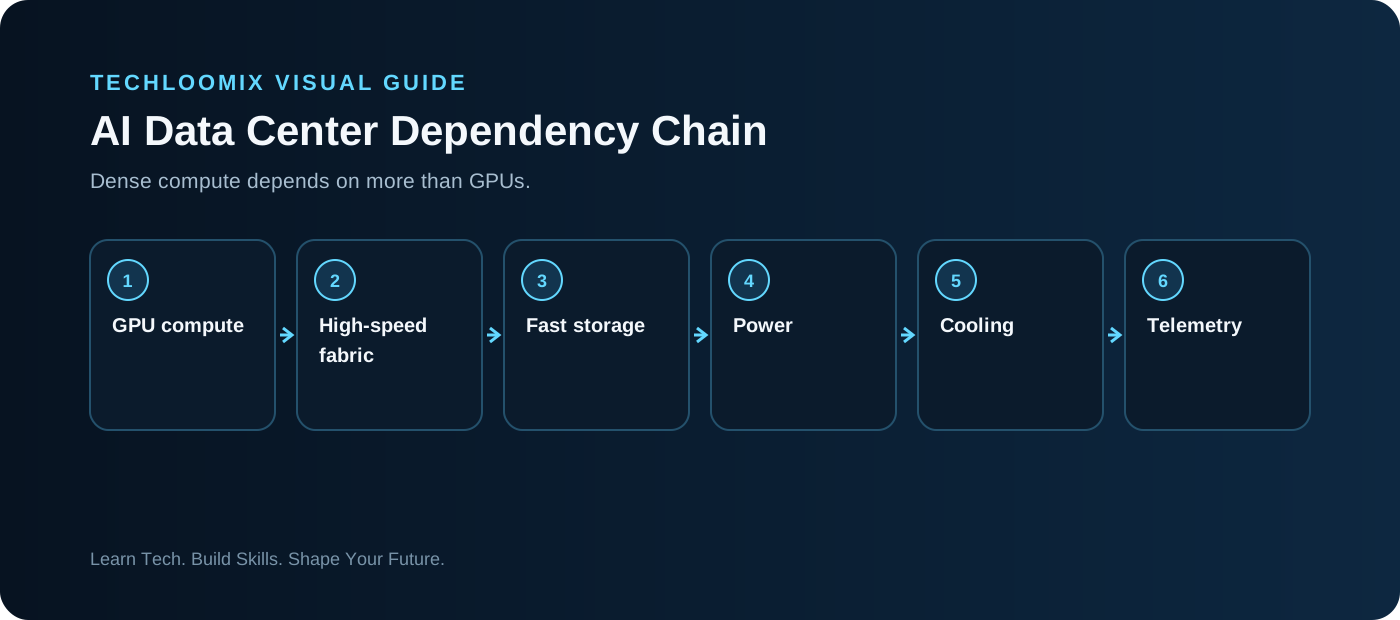
AI INFRASTRUCTURE DEPENDENCY CHAIN
AI changes density
Accelerator-based systems can concentrate large amounts of compute into dense server and rack designs. That changes installation, power, cooling and service considerations.
The network becomes part of compute performance
Distributed AI workloads exchange large volumes of data. High-throughput, low-latency fabrics and careful cabling/optics can become critical to keeping expensive accelerators productive.
Power planning matters
Dense racks can require substantially different electrical planning than traditional enterprise racks. Capacity, redundancy, distribution and monitoring must match the approved design.
Cooling moves closer to the heat
Some high-density platforms use advanced air designs or liquid-cooling systems such as direct-to-chip cold plates and coolant distribution equipment.
Storage must feed the cluster
AI pipelines may require high-throughput storage and data movement. A compute cluster can be underutilized if data cannot arrive fast enough.
Operations become highly coordinated
Technicians, network teams, platform teams, storage teams and facilities teams may all participate in deployment and incident response.
HANDS-ON LAB
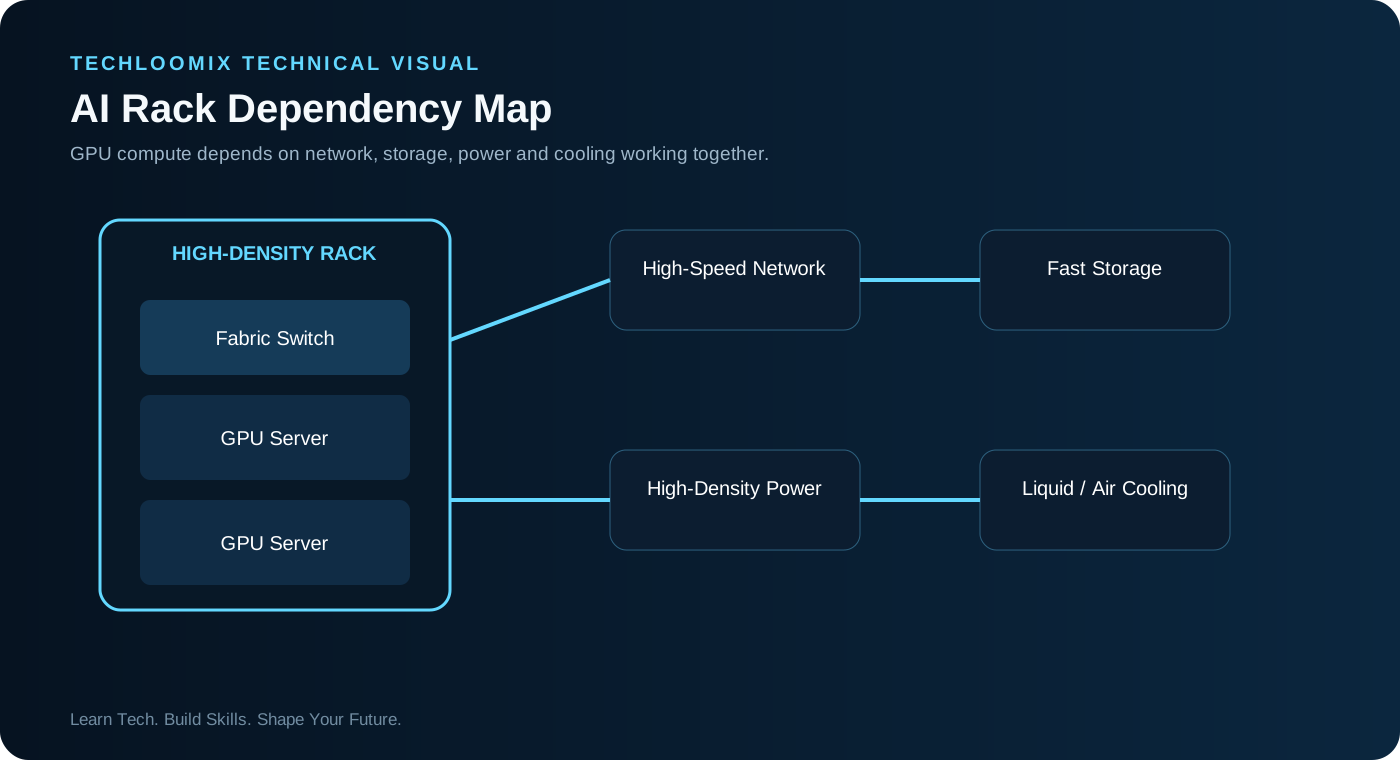
Architecture exercise: design an AI rack dependency map
- Draw a rack containing accelerator servers and top-of-rack/fabric connectivity.
- Add power feeds and cooling dependency.
- Add upstream network and storage paths.
- Mark the telemetry points you would want monitored.
- Choose one failure—optic, power feed, cooling alarm or storage path—and trace the operational impact.
- Write the evidence each team would need during escalation.
TROUBLESHOOTING WORKFLOW
NEXT STEP
Practice. Document. Explain.
Reading creates familiarity. Hands-on work plus clear documentation creates evidence of skill.