
CYBERSECURITY
How to Become a Cybersecurity Analyst
Build toward analyst work through networking, operating systems, identity, security fundamentals, logs, SIEM workflows, investigation practice, and clear incident documentation.
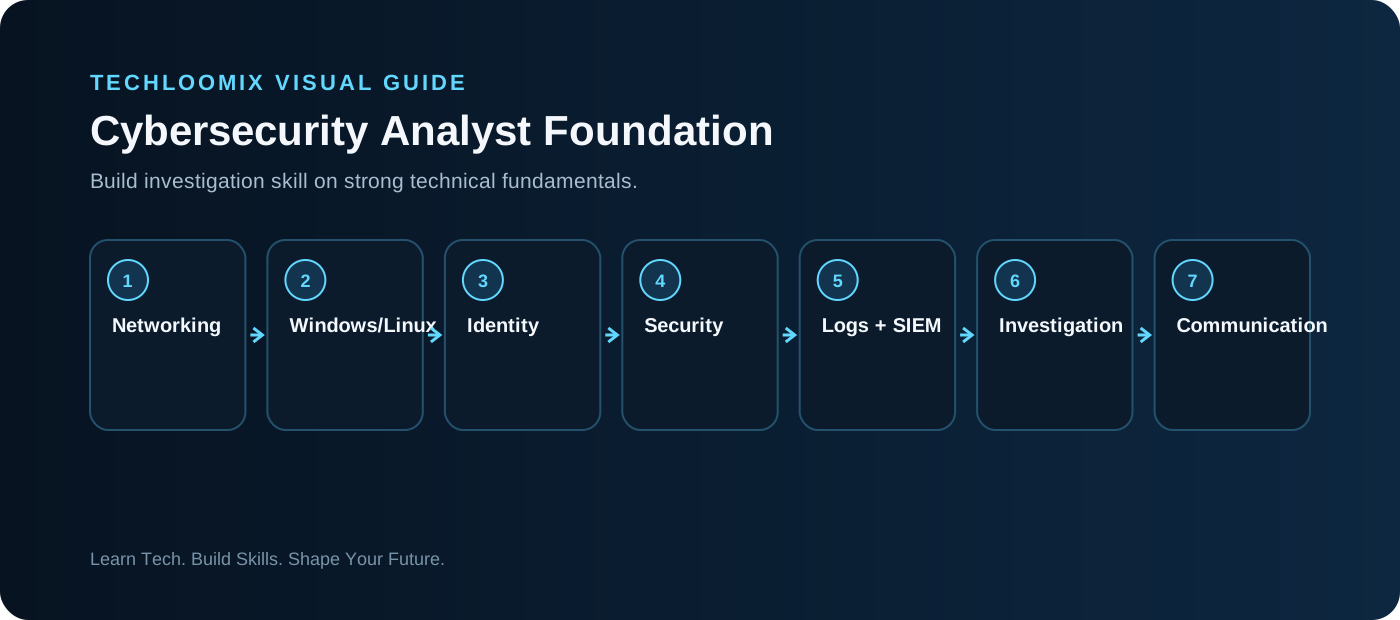
ANALYST FOUNDATION
Start with networks and systems
Security is easier to understand when you know how normal systems communicate, authenticate, run processes, resolve names and record events.
Learn identity
Understand users, groups, permissions, authentication, MFA concepts, privilege and why compromised identities matter.
Learn logs before dashboards
Know what endpoint, authentication, DNS, firewall, proxy and cloud logs can tell you. Dashboards summarize evidence; analysts still need to understand the evidence.
Practice investigation reasoning
For a simulated event, ask what happened, which user/host was involved, what preceded it, what followed it, whether it is expected and how broad the scope is.
Use security tools safely
Work with benign labs and approved training data. Do not execute unknown malware or interact with suspicious links on normal systems.
Communicate decisions
Analysts must explain why an event was closed, escalated or reclassified. Evidence and concise notes are part of the technical skill.
HANDS-ON LAB
Hands-on lab: build a mini investigation case
- Create a fictional endpoint alert.
- Add five log events around the alert time.
- Identify user, host, source/destination and process context.
- Build a timeline.
- List two benign explanations and one malicious hypothesis.
- State what additional evidence would distinguish them.
- Write the escalation note.
TROUBLESHOOTING WORKFLOW
NEXT STEP
Practice. Document. Explain.
Reading creates familiarity. Hands-on work plus clear documentation creates evidence of skill.