
CLOUD
How to Become a Cloud Engineer
Build cloud skills from Linux, networking and identity upward into compute, storage, monitoring, infrastructure as code, security, reliability, and operations.
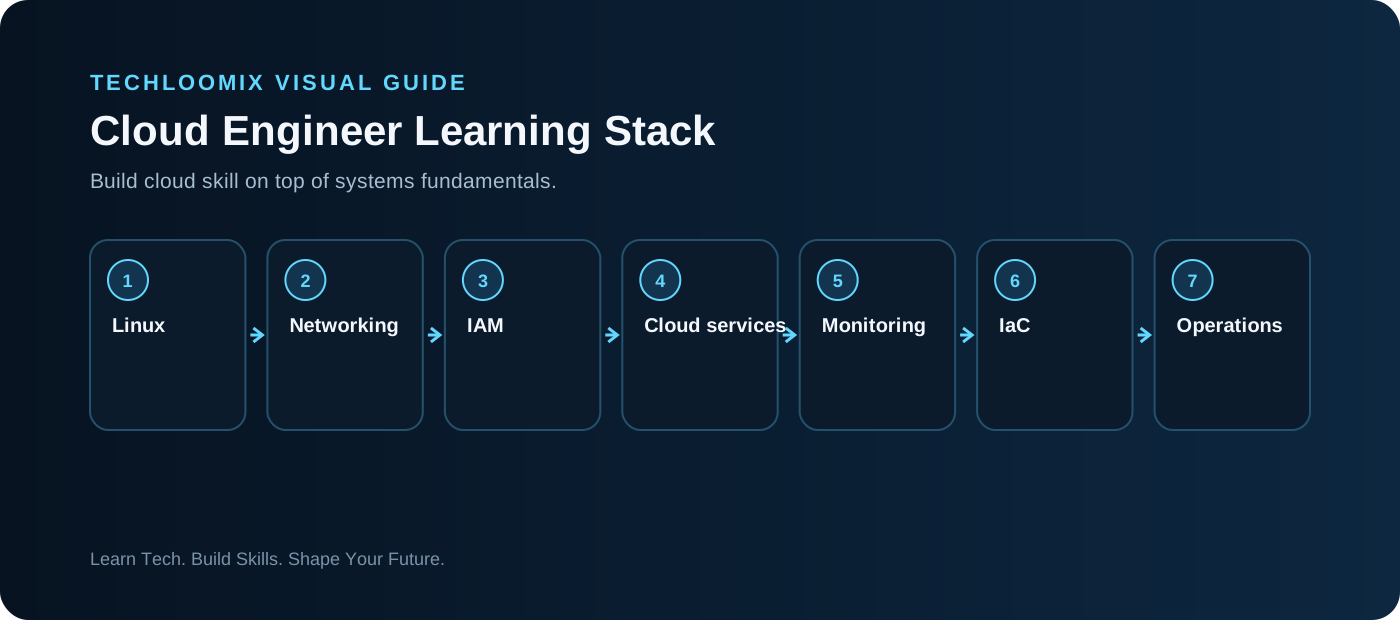
CLOUD ENGINEER LEARNING STACK
Learn the underlying systems
Cloud does not remove Linux, Windows, networking, DNS, routing, identity or troubleshooting. These fundamentals make cloud services understandable instead of memorized.
Choose one provider first
AWS and Azure both teach transferable concepts. Pick the platform that aligns with your target roles and build several complete projects before spreading attention too widely.
Master the core primitives
Learn virtual compute, object/block storage, virtual networking, IAM, load balancing, databases, monitoring and logging.
Build with least privilege
Treat identity and access as part of every project. Avoid broad permissions simply because they make a lab easier.
Learn infrastructure as code
Use Terraform or a provider-native approach to make infrastructure repeatable, reviewable and easier to rebuild.
Operate what you deploy
Add monitoring, alerts, backup/recovery thinking, cost controls, documentation and troubleshooting. Deployment is only the beginning.
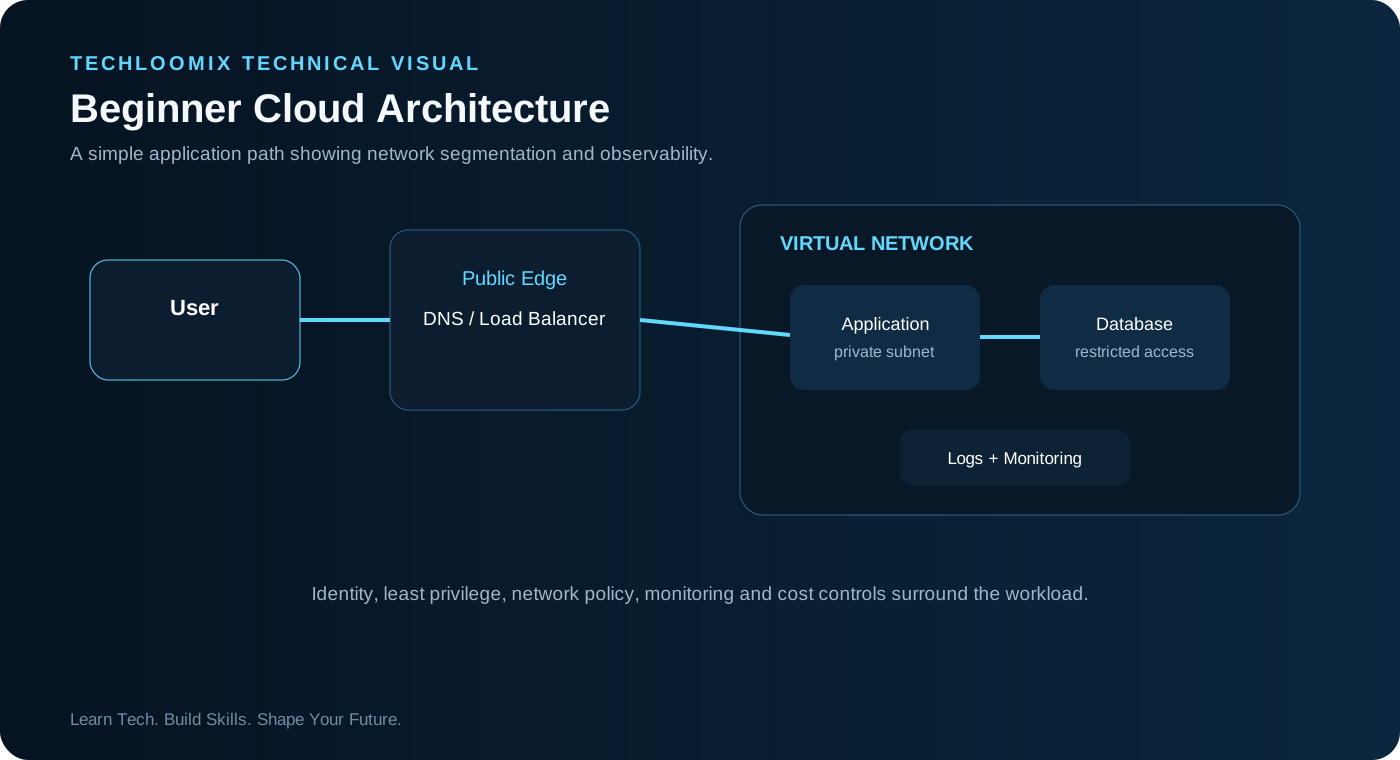
HANDS-ON LAB
Hands-on lab: monitored cloud workload
- Create a small low-cost or free-tier-eligible lab only after reviewing current provider pricing.
- Deploy a minimal compute or static workload.
- Place it in an intentional network design.
- Use least-privilege identity where possible.
- Enable appropriate logs/metrics and one alert.
- Document architecture, security choices and troubleshooting steps.
- Delete resources when the lab is complete to control cost.
TROUBLESHOOTING WORKFLOW
NEXT STEP
Practice. Document. Explain.
Reading creates familiarity. Hands-on work plus clear documentation creates evidence of skill.